

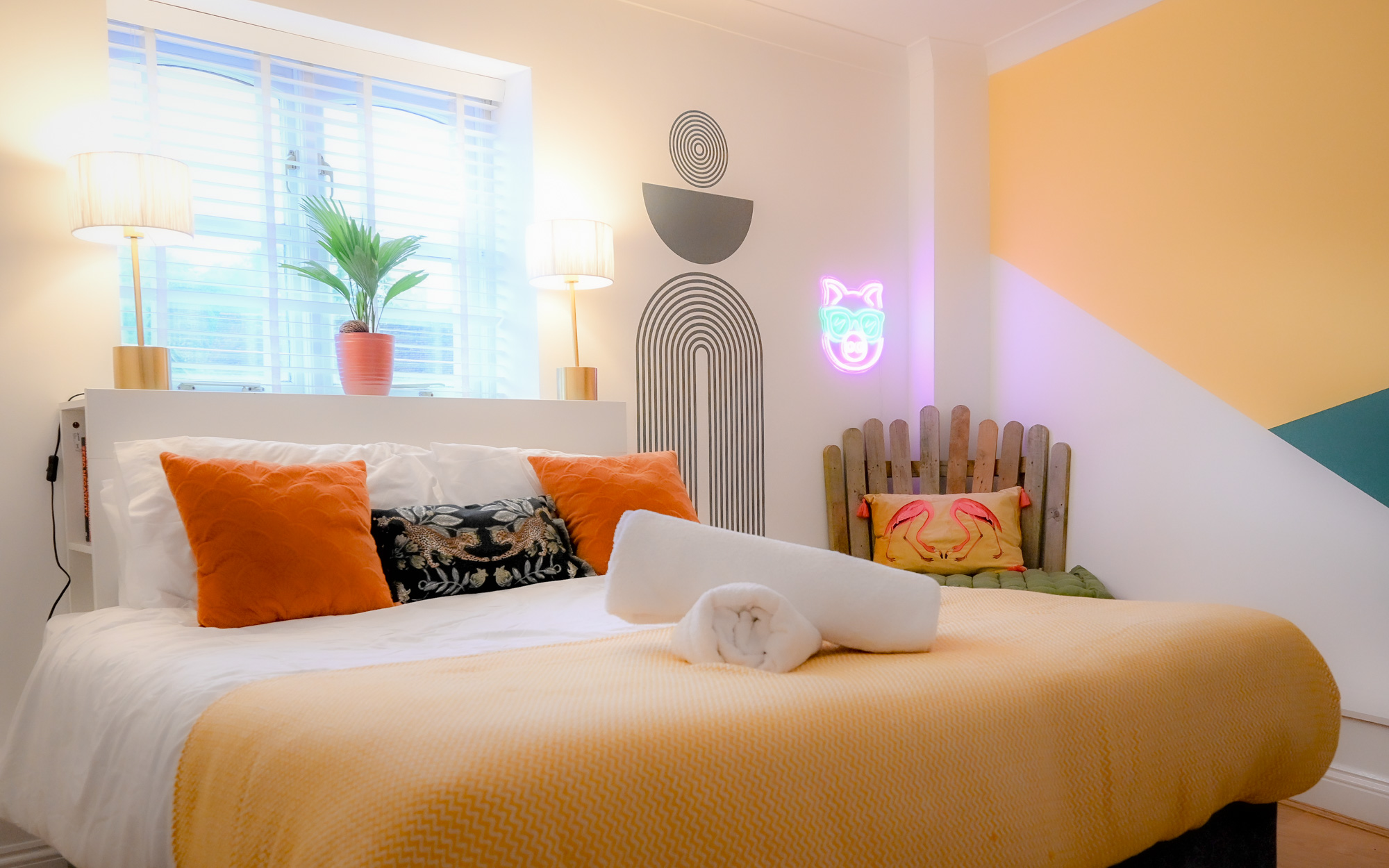
Serviced Accommodation: The Complete No-BS Guide for UK Property Investors
Everyone's throwing around 'serviced accommodation' like it's magic. It's not. But done right, it prints money. Done wrong, it destroys portfolios. Here's everything I've learned running properties across the UK.

Don
5-Star Superhost & Property Investment Expert
Everyone's Talking About Serviced Accommodation. Most People Are Doing It Wrong.
I've lost count of the "gurus" selling courses on serviced accommodation.
They make it sound simple: Rent a flat. Furnish it. Stick it on Airbnb. Watch the money roll in.
And then reality hits. Hard.
I've seen landlords lose £20,000 in their first year. I've watched portfolios collapse. I've picked up the pieces from investors who believed the hype without understanding the game.
But I've also seen serviced accommodation generate returns that make traditional buy-to-let look like a savings account. Properties generating 20%, 30%, even 40% net yields.
The difference? Understanding what serviced accommodation actually is - and what it demands from you.
What Serviced Accommodation Actually Means (Cut Through the Jargon)
Here's the simple version:
Serviced accommodation is a fully furnished property that provides hotel-style services - cleaning, linens, toiletries, WiFi - with the space and privacy of a home.
Standard rentals give tenants a space. That's it. They sort their own cleaning, utilities, everything.
The "serviced" part is what changes everything. And it's what most new operators underestimate.
When you provide services, you're not a landlord anymore. You're running a hospitality business. Different regulations. Different tax treatment. Different operational demands.
Get this wrong, and you're building on sand.
The Real Economics: Why SA Can Crush Traditional Rentals
Let me give you real numbers from a 2-bed in Bedford town centre.
As a standard AST rental:
- Monthly rent: £1,100
- Annual gross: £13,200
- After voids and costs: ~£11,000 net
As serviced accommodation:
- Average nightly rate: £95
- Occupancy: 75%
- Annual gross: ~£26,000
- After cleaning, utilities, consumables, management: ~£16,500 net
That's a 50% increase in net income from the same property.
But here's what the "gurus" don't tell you: those numbers only work with proper systems, professional management, and relentless attention to guest experience.
Run it like an amateur, and you'll achieve 40% occupancy, 3-star reviews, and net income worse than a standard let.
Who Serviced Accommodation Actually Works For
Serviced accommodation isn't for everyone. Let me be brutally honest about who should - and shouldn't - pursue this.
It works brilliantly for:
- Properties near business parks, hospitals, universities (corporate demand)
- Properties within 30 minutes of major attractions (tourism demand)
- Landlords willing to treat this as a business, not passive income
- Investors who want higher returns and accept higher operational complexity
It's a disaster for:
- "Set and forget" landlords who hate guest communication
- Properties in areas with no corporate or tourism demand
- Anyone who thinks Airbnb is still easy money in 2025
- Investors who won't invest in professional photography and proper setup
Be honest with yourself before jumping in.
The Legal Reality Most Operators Ignore
I'm going to say something unpopular: most serviced accommodation operators in the UK are not fully compliant.
They don't know about:
- Planning permission - Many councils now require change of use for short-term lets
- Business rates - SA properties don't pay Council Tax, they pay business rates (sometimes this is favourable, sometimes not)
- Safety certificates - Gas safety, electrical, fire risk assessments - all required
- Insurance - Standard landlord insurance won't cover serviced accommodation. You need specialist cover.
- Licensing - Some areas require additional licensing for short-term lets
Bedford Borough Council, for example, has specific requirements for short-term rental properties. Ignore them, and you're building a business on borrowed time.
This isn't sexy. It's not what sells courses. But it's what protects your investment.
Setting Up For Success: The Non-Negotiables
After managing dozens of properties, here's what actually matters:
Property Selection:
- Location trumps everything. Within 30 minutes of demand drivers (business parks, attractions, transport hubs)
- 2-3 bedrooms outperform studios for families and groups
- Parking is gold in the UK - if you've got it, you've got an advantage
Furnishing That Lasts:
- Buy quality once, not cheap three times
- Everything should photograph well AND withstand heavy use
- White bedding looks great on Airbnb. Grey hides stains better in reality. Find your balance.
The Tech Stack:
- Smart locks - guests hate key safes, and they're a security nightmare
- Noise monitors - protect yourself from party bookings
- Automated messaging - response time directly affects bookings
- Dynamic pricing software - static pricing is leaving money on the table
Professional Photography:
- This is not optional. I cannot stress this enough.
- Amateur photos = amateur rates. It's that simple.
The Management Question: DIY or Professional?
Here's the honest truth about self-management:
It works if:
- You have 1-2 properties
- You're within 20 minutes of the property
- You enjoy guest communication and problem-solving
- You can respond to messages within 15 minutes during waking hours
It fails when:
- You scale beyond 2 properties
- You have a full-time job that demands your attention
- A guest has an emergency at 11pm on a Saturday
- You go on holiday and bookings still need managing
Most operators who try to self-manage beyond 2-3 properties eventually burn out or watch their review scores drop.
Professional management typically costs 15-20% of revenue. But professional managers often achieve 20-40% higher occupancy than self-managers. The maths often works out in favour of outsourcing.
We charge 16% of net revenue. Most clients find they earn more after our fee than they did managing themselves - plus they get their weekends back.
The Bedford Resort Effect: Why Bedford Changes Everything
I have to mention this because it's the biggest opportunity in UK serviced accommodation right now.
Bedford's Entertainment Resort - the UK's largest ever tourism development - opens in 2031. We're talking 8.5-12.5 million visitors annually based on official planning documents. That's approaching Disneyland Paris numbers.
Properties within 30 minutes of the site will see:
- Massive demand from theme park visitors (families, groups)
- Year-round bookings (not just summer peaks)
- Premium rates during park events and holidays
But here's what most people miss: the construction phase creates opportunity too.
The construction phase employs thousands of workers over the next 6 years, with an estimated 1,000-2,000 non-local specialists requiring temporary accommodation at any given time. Contractor lets. Corporate stays. Extended bookings.
If you're considering serviced accommodation anywhere in the Bedford, Milton Keynes, or Cambridge corridor, you're sitting on a goldmine. But only if you execute properly.
Common Mistakes That Kill SA Businesses
I've seen these destroy more portfolios than I can count:
1. Underestimating setup costs
Budget £5,000-£15,000 per property for furnishing, photography, and initial setup. Anything less and you're cutting corners that will cost you in reviews.
2. Ignoring seasonality
Most UK locations have slow periods. January-February. Sometimes November. Build this into your projections or you'll panic when bookings drop.
3. Pricing too low to "build reviews"
Low prices attract low-quality guests. Price competitively for your market, not desperately. Quality attracts quality.
4. Neglecting maintenance
One broken shower, one faulty heating system, one guest without hot water - that's a 1-star review that haunts you for months.
5. No buffer for voids
If you need 80% occupancy just to break even, you've structured the deal wrong. Build buffer into every projection.
Is Serviced Accommodation Right For You?
Let me leave you with a simple framework:
Pursue SA if:
- You want higher returns and accept higher complexity
- You're willing to treat this as a business
- Your property is in a location with genuine demand
- You can invest in proper setup and systems (or professional management)
Stick with traditional letting if:
- You want truly passive income
- You hate dealing with operational issues
- Your property is in a location without tourism or corporate demand
- You can't stomach the idea of variable income
There's no wrong answer. Just wrong expectations.
Take Action
Ready to move forward? Here's what to do next.
Ready to Maximise Your Property Returns?
Let's discuss your property goals and see if we're the right fit to help you succeed.
Frequently Asked Questions
Common questions about this topic